Invitation to Participate
in our "Neptune/Triton" Experiment

Dear Friends of Astronomy!
AiM (Astronomy and internet in Münster), with the kind support of The Schools' Observatory and FTP-europlanet, launched the "Neptune/Triton" astronomy experiment in May 2026, which will run through January 2027.
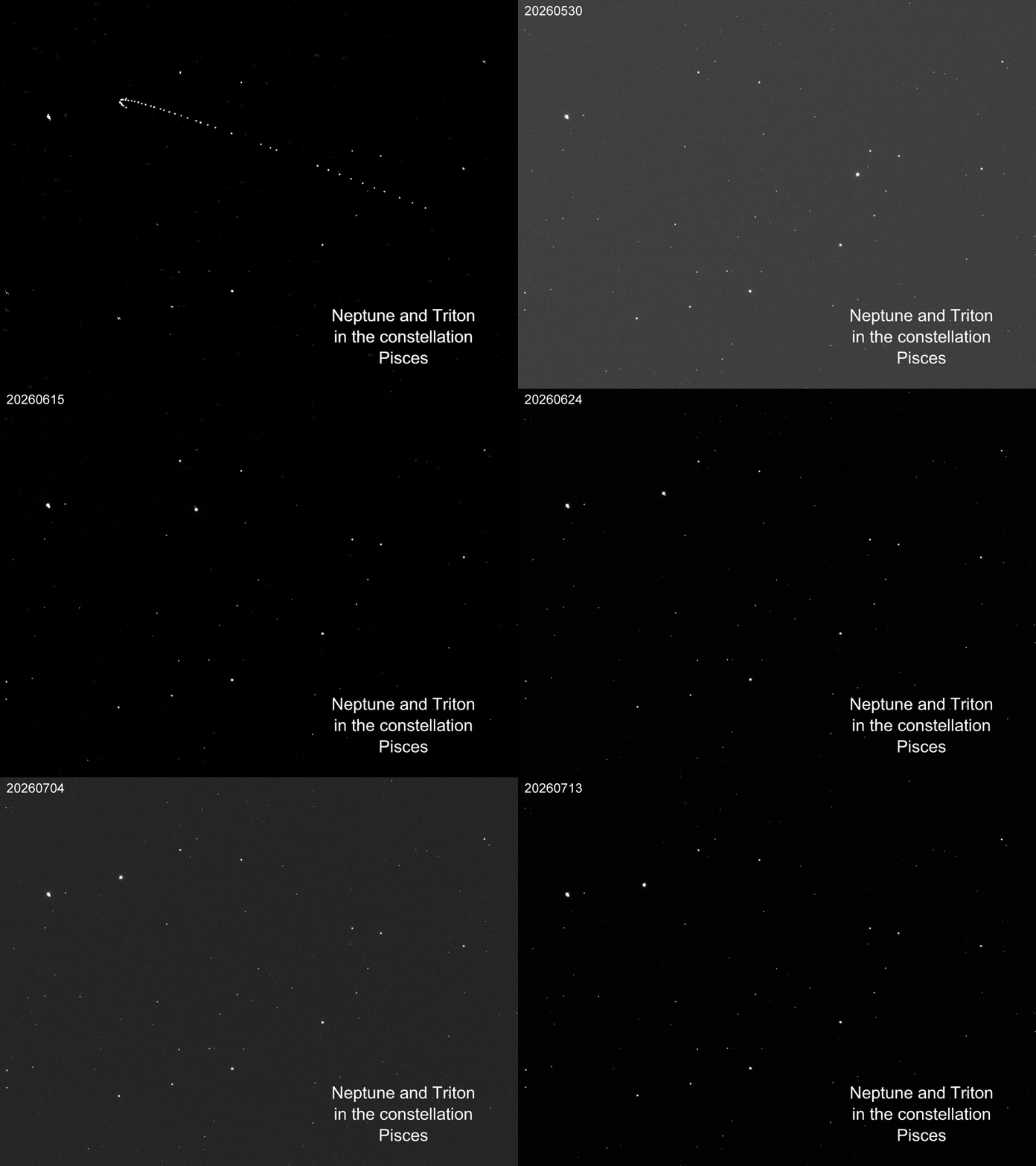
What can you experience?
- A nightly "LIVE" tracking of a complete orbit of Neptune, as long as it remains visible.
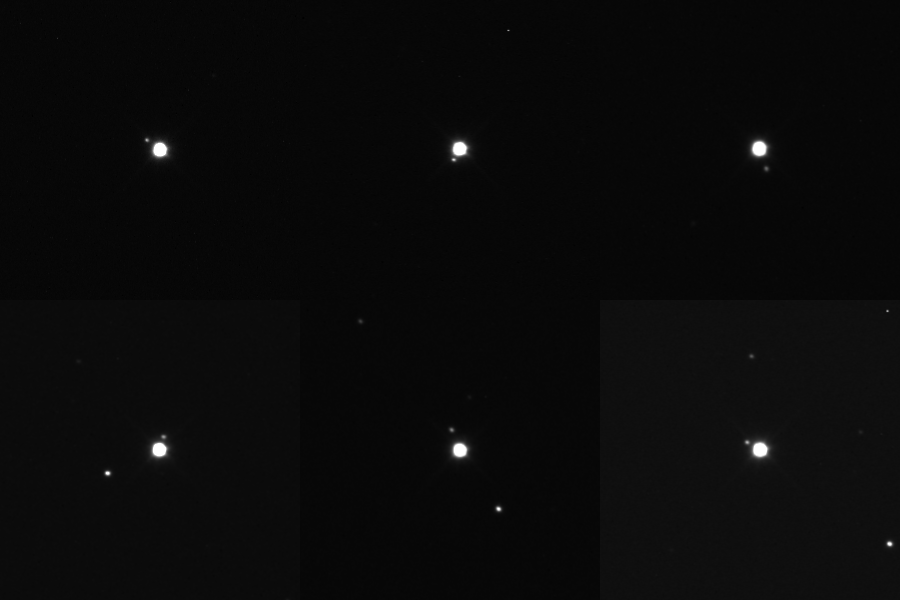
- Observation of Neptune's moon Triton as it orbits Neptune.
The observation site is the Ratsgymnasium in Münster, Germany, under the direction of Thiemo Sieger.
Imaging technique:
The plan is to image Neptune daily through January 2027 using the 0.35-meter telescopes at Las Cumbres Observatory. With an exposure time of 2.5 seconds, oversaturation of the QHY600 camera's CMOS chip is prevented. To achieve higher resolution and lower noise, four images are always taken, which can be either summed or averaged. This results in images with exposure times ranging from 2.5 seconds to 10.0 seconds.
Observations to Date:
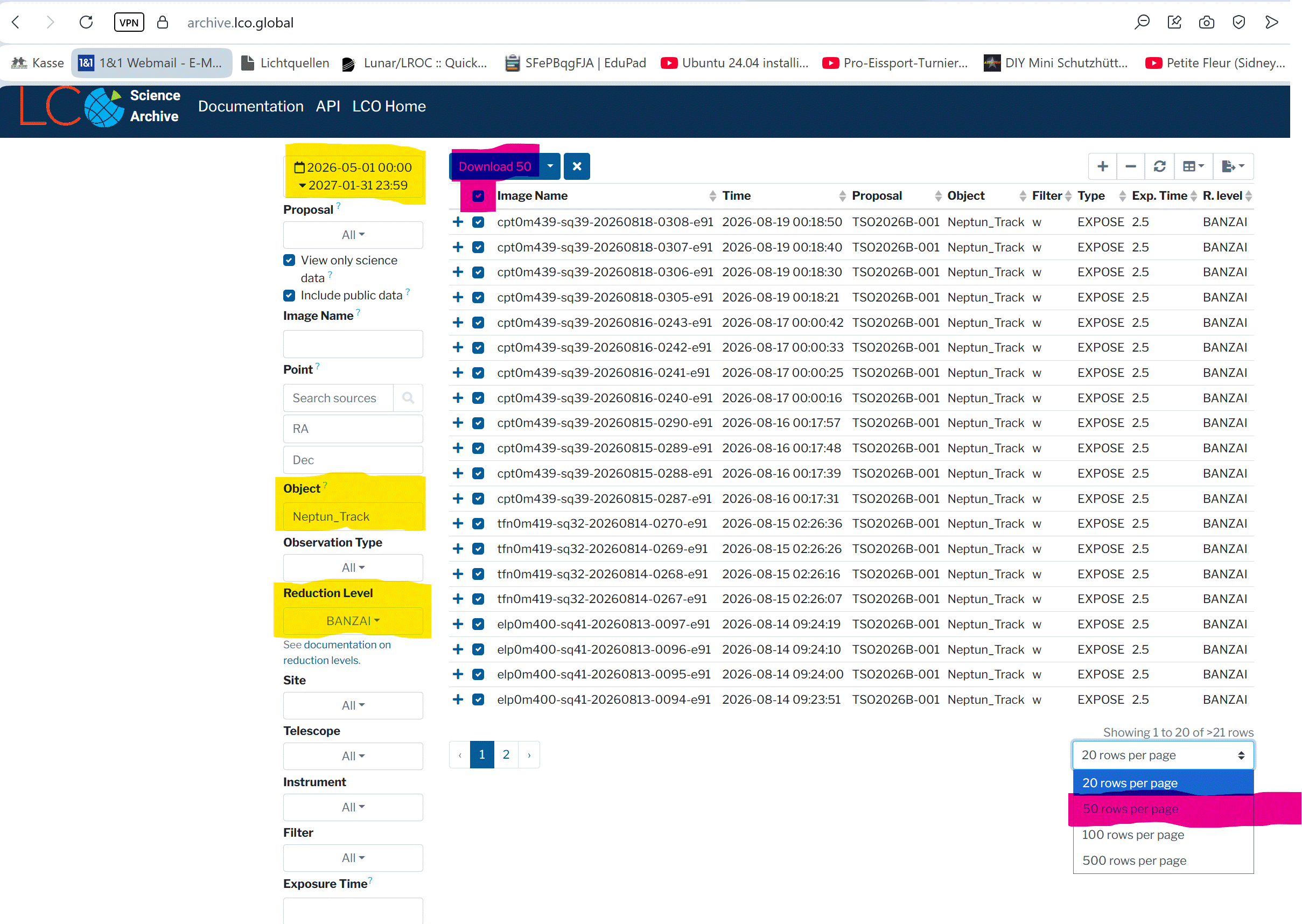
The easiest way to access the images taken so far is through the LCO archive:
Tips:
- Pay close attention to the date (top left), especially after July 31, 2026!
- Download 50 images at a time: a good balance between the number of images and download time!
What you can do:
- Observe and enjoy!
- Experiment with the images:
- Do the images improve when summed or averaged (median or arithmetic)?
- Create GIF animations of the motion of Neptune and Triton.
- Determine the apparent speed of Neptune in terms of magnitude and direction.
- Learn what you're seeing here:
- Is Neptune really making loops?
- Determine the orbital period and speed of Triton.
- Calculate Neptune's mass.
- Supplement or improve our images with your own:
- Use TSO's 2.0m Liverpool Telescope
- Track Neptune in the fall with your own equipment (e.g., smart telescopes).
- Maybe you'll find a better imaging technique.
- Let your imagination run wild: from short presentations to determining the Keplerian orbital parameters of Earth — anything goes!
Results:
Please send your results to: p-breitenstein@aim-ms.de
We would be delighted to see participation from across Europe — or perhaps even worldwide — and, above all, to hear about your experiences!